
Why Property Owners Should Avoid Relying Only On The Insurer’s Estimate
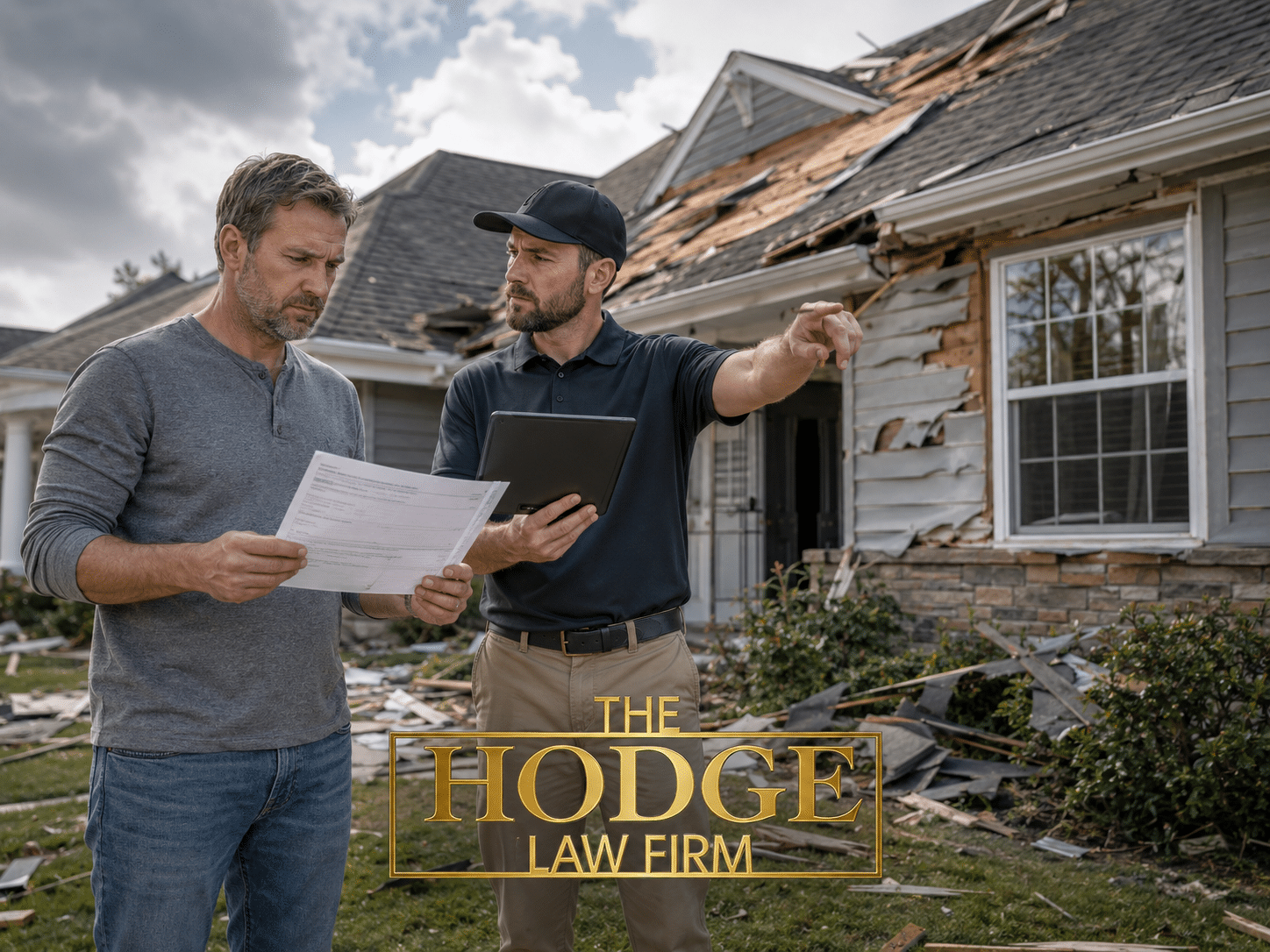
After a hurricane or severe hailstorm, one of the first documents many property owners receive is the insurance adjuster’s estimate. For many homeowners and business owners, this estimate becomes the benchmark for every repair decision that follows. They assume the insurance company has thoroughly inspected the property, accurately calculated the damage, and determined the amount necessary to restore the building. While that may be true in some cases, it is not always the reality.
Insurance estimates are only one evaluation of a property loss. They are not automatically complete, final, or free from error. Property owners who rely exclusively on an insurer’s estimate may unknowingly accept a settlement that falls far short of the actual cost of restoring their property. Unfortunately, by the time they realize the estimate was incomplete, they may already be facing unexpected repair expenses, additional property damage, and disputes with contractors.
At The Hodge Law Firm, we represent homeowners and business owners in complex insurance disputes involving hurricane and hail damage. We understand how insurance companies evaluate property losses, and we have seen firsthand how incomplete estimates can leave policyholders paying for repairs that should have been covered under their insurance policies. Our goal is to help property owners understand their rights and hold insurance companies accountable when they fail to honor their obligations.
An Insurance Estimate Is Not The Final Word On Your Claim
Many people assume that because the estimate comes from the insurance company, it represents an objective and comprehensive assessment of the damage. In reality, an insurance estimate is simply one opinion based on the information available to the adjuster at the time of the inspection. Like any evaluation, it can contain omissions, incorrect assumptions, or pricing that does not accurately reflect the true cost of repairs.
Insurance adjusters often work under demanding conditions after major storms. Following a widespread hurricane or hail event, they may inspect numerous properties each day while attempting to process thousands of claims in a relatively short period. Even experienced adjusters can overlook important damage when inspections are rushed or when certain problems are not immediately visible.
Property owners should view the insurance estimate as the beginning of the conversation, not necessarily the conclusion. Comparing it with contractor estimates, engineering reports, or other professional evaluations may reveal significant differences that deserve further attention.
Storm Damage Is Often More Extensive Than It First Appears
One of the biggest reasons insurance estimates fall short is that many forms of storm damage are not immediately obvious. A roof may appear to have only a few damaged shingles, yet the impact of high winds or hail may have compromised the underlayment, flashing, decking, or other components that cannot be seen during a quick visual inspection.
Water intrusion presents another common example. Moisture may enter through small openings in the roof or exterior walls and slowly spread throughout insulation, ceilings, drywall, and framing. Days or weeks may pass before stains, mold, or structural deterioration become visible. By then, the true scope of the loss may be far greater than what was reflected in the original estimate.
Commercial properties present even greater challenges. Damage to rooftop mechanical equipment, electrical systems, specialized building materials, or tenant improvements may not become apparent until repairs begin. An estimate prepared immediately after the storm may not account for these additional losses.
Because storm damage often develops over time, property owners should be cautious about assuming the first inspection captured every necessary repair.
Insurance Companies And Contractors Often View Repairs Differently
It is not unusual for a contractor’s estimate to be substantially higher than the insurance company’s estimate. This difference does not automatically mean either party acted improperly. In many cases, the two professionals are approaching the project from different perspectives.
A contractor is responsible for restoring the property to a safe and functional condition. That often requires identifying every damaged component, complying with current building codes, coordinating labor, obtaining materials, and accounting for conditions discovered during demolition.
The insurance company, on the other hand, is evaluating what it believes the policy requires it to pay. Those evaluations may rely on estimating software, standardized pricing databases, or assumptions about what repairs are necessary. If important damage is overlooked or pricing does not reflect current market conditions, the estimate may not provide enough money to complete the project.
For this reason, property owners should carefully compare estimates rather than assuming the insurance company’s figures are automatically correct.
Low Estimates Can Create Long-Term Financial Consequences
Accepting an inadequate estimate can have consequences that extend well beyond the initial repair project. If the insurance payment is insufficient, property owners may have to use personal savings, borrow money, or postpone necessary repairs. In some cases, partial repairs may temporarily address visible damage while hidden problems continue to worsen.
A roof that is only partially repaired may continue to leak during future storms. Moisture trapped inside walls can contribute to mold growth and structural deterioration. Damaged siding or windows may allow additional water intrusion. Over time, these issues can significantly increase the cost of restoring the property.
For business owners, inadequate insurance payments may also delay reopening, disrupt operations, and create lost revenue. Apartment owners and landlords may experience tenant complaints, vacancies, or reduced rental income while waiting for repairs to be completed.
Carefully evaluating the insurance estimate before accepting payment can help reduce the risk of these long-term financial challenges.
Questions Every Property Owner Should Ask Before Accepting An Estimate
Rather than focusing only on the total dollar amount, property owners should carefully review the estimate itself. Understanding what was included and, just as importantly, what may have been omitted can help identify potential concerns.
Questions worth asking include:
- Does the estimate address every area of visible storm damage?
- Were all buildings, structures, and exterior components inspected?
- Does the pricing reflect current labor and material costs?
- Are building code requirements included where applicable?
- Does the estimate account for hidden or secondary damage?
- Have contractor estimates identified repairs that are missing from the insurance company’s evaluation?
These questions can provide valuable insight into whether additional review may be appropriate.
Independent Documentation Can Strengthen Your Position
Property owners do not have to rely solely on the insurance company’s evaluation of their loss. Independent documentation can provide valuable support throughout the claims process.
Photographs, videos, contractor estimates, engineering reports, maintenance records, invoices, and repair proposals can all help demonstrate the true extent of the damage. For commercial properties, financial records, lease agreements, maintenance logs, and operational records may also become important.
Well-organized documentation often makes it more difficult for insurance companies to overlook damage or underestimate repair costs.
How The Hodge Law Firm Helps Property Owners Evaluate Insurance Estimates
At The Hodge Law Firm, we represent policyholders in insurance disputes involving hurricane and hail damage. We understand that an insurance estimate is only one piece of the claims process, and we know how to identify situations where important damages may have been overlooked or undervalued.
When we evaluate a claim, we carefully review the insurance policy, examine the insurer’s estimate, compare available repair documentation, and assess whether additional compensation may be available. We also evaluate how the insurance company handled the claim and whether it fulfilled its obligations under the policy.
Some disputes can be resolved through negotiation after additional information is presented. Others require litigation when the insurance company refuses to fairly evaluate the claim. Regardless of the path forward, our focus remains the same: protecting policyholders and holding insurance companies accountable.
Do Not Feel Pressured To Accept The First Number
Many property owners worry that questioning an insurance estimate will delay their claim or create conflict with the insurance company. In reality, reviewing an estimate carefully and seeking additional information is a reasonable part of the claims process.
Before accepting a settlement, make sure you understand exactly what the estimate includes, what repairs may still be necessary, and whether independent evaluations identify additional damage. A careful review today may help prevent expensive surprises tomorrow.
Frequently Asked Questions About Insurance Estimates After Storm Damage
Is The Insurance Company’s Estimate Always Accurate?
No. While some estimates are thorough, others may overlook damage, underestimate repair costs, or fail to account for hidden issues.
Can I Obtain My Own Repair Estimate?
Yes. Many property owners obtain estimates from qualified contractors to better understand the actual cost of restoring their property.
What If My Contractor’s Estimate Is Much Higher?
Significant differences are common. The estimates should be compared carefully to determine why they differ and whether important repairs were omitted.
Should I Accept The Insurance Company’s First Payment?
Not until you have reviewed the estimate carefully and determined whether it reflects the full scope of the damage.
Can Businesses Also Challenge Low Insurance Estimates?
Yes. Commercial property owners frequently dispute estimates involving building damage, equipment, and business interruption losses.
When Should I Speak With An Attorney?
If you believe your insurance estimate is incomplete, your claim has been delayed, or the insurance company refuses to pay the full value of your loss, speaking with an attorney can help you better understand your rights.
Contact The Hodge Law Firm For A Complimentary Consultation
If you believe your insurance company’s estimate does not accurately reflect the damage to your property, The Hodge Law Firm is ready to help.
We represent homeowners and business owners in complex insurance disputes involving hurricane and hail damage. Our firm is committed to holding insurance companies accountable and helping policyholders pursue the compensation they deserve under their insurance policies.
Call the property damage attorney at The Hodge Law Firm today at 409-762-5000 for a free consultation.
We Hold Insurance Companies Accountable.


