
Can a Colorado Hail Claim Include Damaged Gutters, Siding, and Windows?
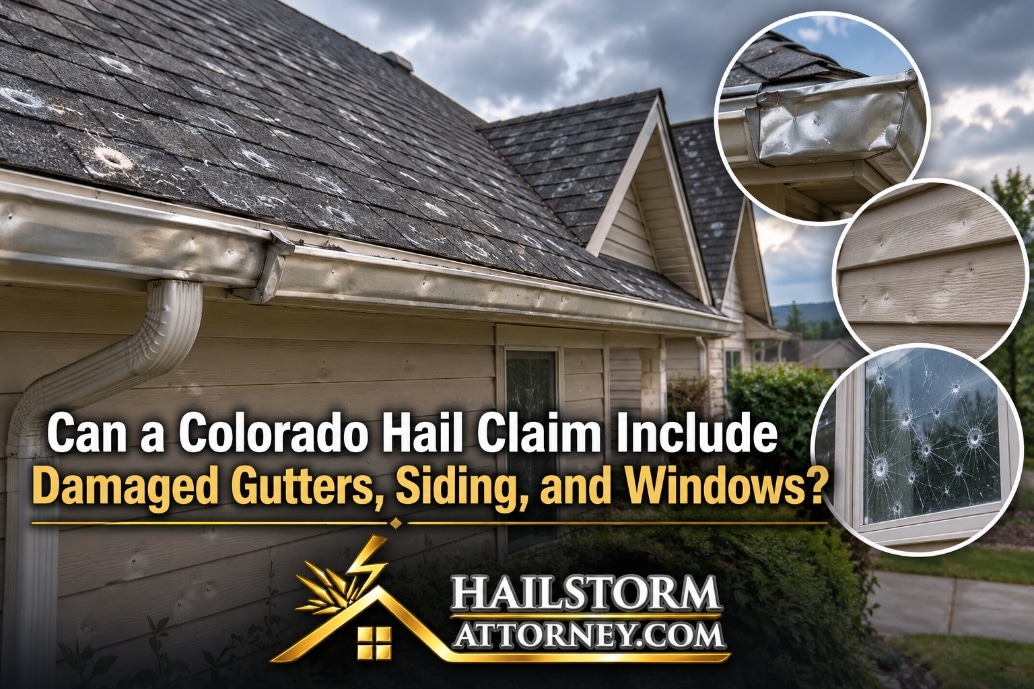
Hailstorms in Colorado often damage more than just roofs. Large hail, strong winds, and flying debris can dent gutters, crack siding, break windows, and harm other exterior materials. Sometimes, insurance companies focus only on roof damage and miss other affected areas. This can leave homeowners and business owners with repair costs that were not included in the insurance estimate. At The Hodge Law Firm, we help policyholders challenge denied or underpaid hail claims when insurance companies do not cover all storm-related losses.
Does Colorado Property Insurance Cover Hail Damage Beyond the Roof?
Most Colorado homeowners and commercial property insurance policies cover direct hail damage, including harm to gutters, siding, windows, and other parts of the building. However, what is covered depends on the specific policy wording, exclusions, endorsements, deductibles, and any limits that apply.
A typical property insurance policy might cover hail damage to exterior materials even if the roof is mostly unharmed. For example, a storm could dent aluminum gutters, crack vinyl siding, and break windows without damaging the roof. If the policy covers hail, these losses may still be included.
Colorado property owners should review the insurance company’s estimate to see if it includes all damaged exterior parts. If the estimate only covers the roof, it may not reflect the true cost of repairs.
Hail Damage to Gutters and Downspouts
Gutters and downspouts are especially at risk during Colorado hailstorms because they are often made of thin aluminum, steel, or similar materials that dent easily. Large hail can bend gutters, damage fasteners, and affect how well the system moves rainwater away from the building.
Insurance adjusters may call gutter dents cosmetic instead of functional damage. This difference is important because some policies exclude or limit cosmetic damage. Property owners should check if the damage affects drainage, causes standing water, misaligns the gutters, or weakens the system.
Damaged gutters can lead to more problems for your property. Overflowing water near the foundation can harm landscaping, exterior walls, or lower parts of the building. If these issues are caused by a covered hailstorm, the insurance claim should include both the direct damage and any resulting losses.
When Colorado Hailstorms Damage Siding
Hailstorms in Colorado often damage siding made of vinyl, aluminum, wood, or fiber cement. Depending on the material and hail size, damage can include cracks, holes, chipped paint, dents, and broken panels. Some damage is easy to see, but other issues may only show up during a close inspection.
Insurance disputes frequently arise when an adjuster approves replacement of several damaged siding panels but refuses to address the surrounding materials. Replacement products may differ in color, texture, dimensions, or availability, particularly when the original siding has been discontinued.
Colorado does not impose a universal requirement that insurance companies replace all undamaged siding simply to achieve a uniform appearance. Nevertheless, policy language, repair feasibility, and Colorado’s claim-handling requirements may affect whether a proposed partial repair adequately restores the covered damage. We examine these issues when evaluating whether an insurance company’s proposed settlement is sufficient.
Broken Windows, Damaged Frames, and Window Seals
Windows are another important component of a Colorado hail damage claim. Large hailstones can crack glass, break exterior panes, dent metal frames, damage screens, and compromise window assemblies. Strong winds accompanying a hailstorm may also cause debris to strike windows and surrounding materials.
Not all window damage involves shattered glass. Impact damage can affect frames, seals, glazing components, and the weather-resistant features that help prevent moisture intrusion. When an insurance company approves glass replacement but excludes related damage to the window assembly, the proposed repair may not fully address the loss.
Property owners should document broken windows and arrange necessary temporary protection to prevent additional damage. Photographs taken before emergency repairs, contractor findings, and repair invoices can help establish the extent of the original storm damage and the reasonable cost of addressing it.
Why Insurance Companies Underestimate Exterior Hail Damage
One of the most common problems with Colorado hail claims involves incomplete property inspections. An insurance adjuster may spend considerable time examining the roof while conducting only a limited inspection of gutters, siding, windows, and exterior fixtures. Damage that is not photographed or recorded may never appear in the initial estimate.
Insurance companies may also dispute whether exterior damage resulted from the reported storm. They might attribute dented gutters to previous weather events, cracked siding to aging materials, or window problems to improper installation. These explanations can become particularly contentious when a property has experienced several hailstorms over multiple years.
At The Hodge Law Firm, we review the insurer’s stated reasons for denying or limiting payment. We also evaluate available evidence, including storm reports, photographs, contractor assessments, inspection records, and policy provisions, to determine whether the insurance company has properly considered the claimed damage.
Colorado Laws Protecting Policyholders From Unreasonable Claim Practices
Colorado law establishes important protections for property owners dealing with insurance companies. Under Colorado Revised Statutes § 10-3-1115, an insurer generally may not unreasonably delay or deny payment of benefits owed to a first-party claimant. Whether a delay or denial is unreasonable depends on the applicable legal standards and circumstances.
Colorado Revised Statutes § 10-3-1116 allows qualifying claimants to pursue statutory remedies for unreasonable delay or denial, potentially including two times the covered benefit and reasonable attorney fees and court costs. These remedies are not automatic, and the statute’s requirements must be satisfied.
Colorado’s Unfair Claims Settlement Practices Act, C.R.S. § 10-3-1104(1)(h), also identifies prohibited claim-handling practices, including certain failures to conduct reasonable investigations. Although this provision does not independently create a private lawsuit for every violation, it may be relevant when evaluating an insurer’s conduct.
How We Help Colorado Property Owners Challenge Underpaid Hail Claims
When an insurance company overlooks gutters, siding, or windows, we begin by examining the insurance policy, the adjuster’s estimate, and the reasons provided for limiting payment. We look for inconsistencies between documented storm damage and the repairs the insurer has agreed to cover.
We also consider whether the insurer has properly evaluated repair methods, material availability, and the costs associated with restoring damaged building components. Depending on the dispute, additional inspections, contractor estimates, or technical assessments may help establish the actual scope of the loss.
If the insurance company continues to deny covered damage or refuses to make a reasonable payment, we evaluate the legal options available under Colorado law. Our objective is to hold insurers accountable for their contractual obligations and pursue the benefits policyholders are legally entitled to receive.
Frequently Asked Questions About Colorado Hail Damage Claims
Can My Colorado Insurance Claim Include Gutters if My Roof Was Not Damaged?
Yes. Roof damage is not necessarily required for a covered gutter claim. If hail directly damages insured gutters or downspouts, those components may qualify for coverage independently. The insurance company must evaluate the claimed damage according to the policy rather than automatically rejecting it because the roof survived the storm.
Will Insurance Pay to Replace All My Siding if Only One Wall Was Damaged?
Not necessarily. Coverage depends on the policy, the damaged materials, and whether an appropriate repair is possible. When replacement siding is unavailable or cannot reasonably restore the covered damage, additional repairs may be disputed. Colorado does not automatically require complete siding replacement solely because new materials look different.
Are Window Screens and Frames Covered After a Colorado Hailstorm?
They may be covered when hail causes direct physical damage, and the policy does not exclude the loss. Screens, frames, and other window components should be inspected separately because damage to these materials may be overlooked when the insurance company focuses only on broken glass.
What if My Insurance Adjuster Missed Exterior Hail Damage?
You can notify the insurance company about the omitted damage and request further consideration or a supplemental inspection. Photographs, contractor assessments, and detailed repair estimates may support the request. If the insurer continues to exclude covered damage without a reasonable basis, an insurance claim attorney can evaluate the dispute.
How Long Do I Have to File a Colorado Hail Damage Lawsuit?
The deadline depends on the legal claim and circumstances. Colorado generally applies a three-year limitations period to contract actions under C.R.S. § 13-80-101(1)(a), but insurance policy provisions, statutory claims, accrual rules, and other legal considerations can affect the applicable deadline. Policy notice and proof-of-loss requirements may arise much sooner, making prompt review important.
Contact The Hodge Law Firm for a Complimentary Consultation
If your Colorado hail damage claim excludes damaged gutters, siding, windows, or other exterior components, you should not assume the insurance company’s estimate represents the full amount of coverage available. At The Hodge Law Firm, we represent property owners in disputes involving denied, delayed, and underpaid insurance claims.
Call the hail damage lawyers at The Hodge Law Firm today at 409-762-5000 for a free consultation to discuss your Colorado hail damage insurance dispute and learn how we may help you pursue the benefits available under your policy.
We Hold Insurance Companies Accountable.


