
Big Claims, Big Stakes: Why Commercial Wildfire Claim Denials Require a Lawyer
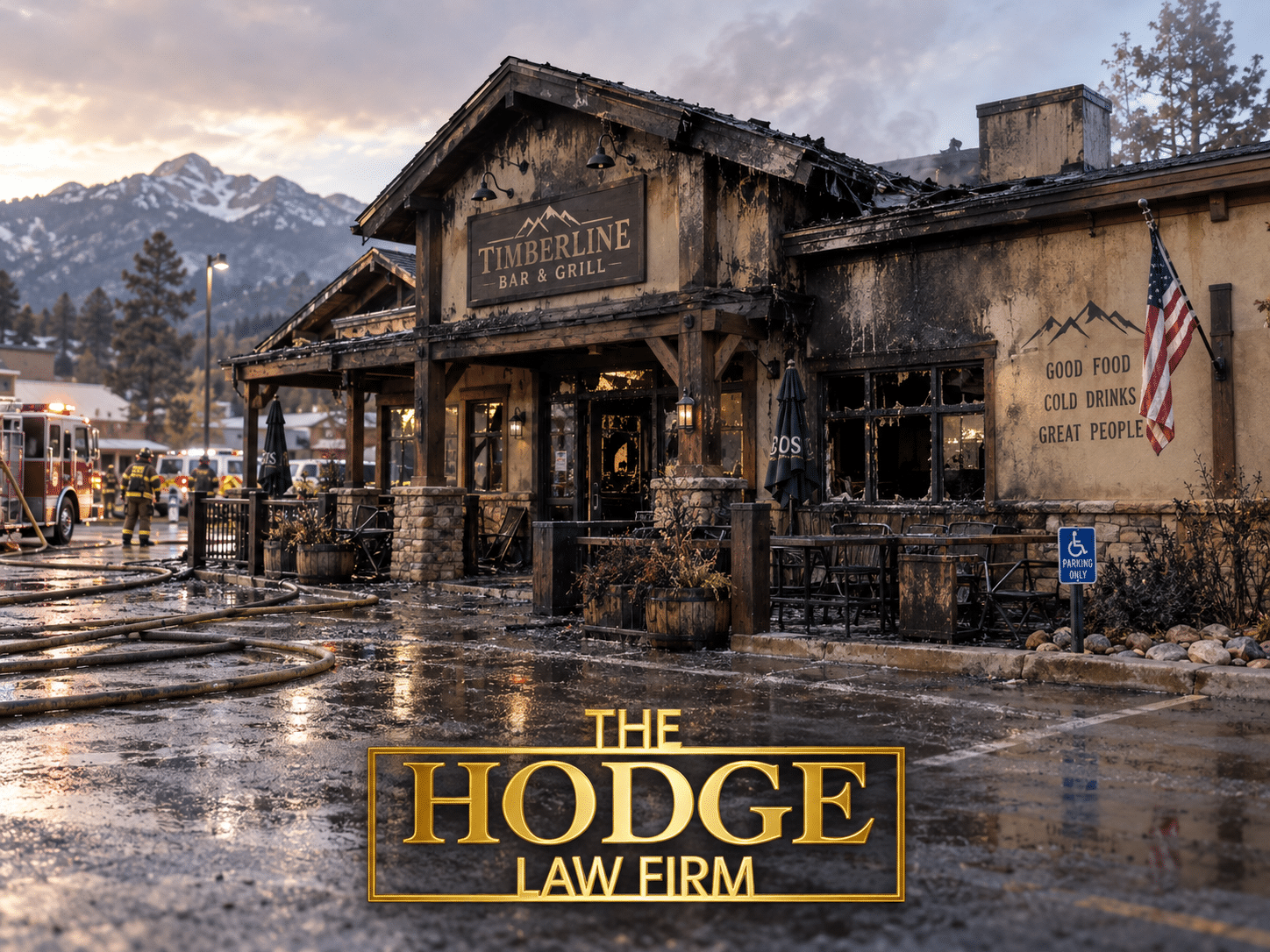
Wildfires can cause business losses that go well beyond damaged buildings or equipment. Companies may deal with destroyed structures, smoke damage, lost inventory, broken machinery, power outages, forced closures, and months without income. If an insurance company denies or limits coverage for a major wildfire claim, the financial impact can put the entire business at risk.
At The Hodge Law Firm, we help policyholders with serious insurance disputes. We know that a commercial wildfire claim is usually about much more than just fixing a building. These cases often involve different types of coverage, conflicting damage estimates, complicated accounting, questions about what caused the damage, exclusions, sublimits, deductibles, and debates over how long it should take for a business to recover
When a business faces a large loss, insurance companies have a strong reason to examine every part of the claim closely. With millions of dollars involved, policyholders should expect insurers to look for reasons to exclude, limit, or reclassify parts of the loss, or say that some damage is not covered. This is why a major wildfire denial should be seen as both a legal and financial issue, not just another claim to be reviewed.
Commercial Wildfire Claims Can Involve Several Different Types Of Loss
One reason these disputes get complicated fast is that a single wildfire can affect several types of insurance coverage.
The most obvious loss is usually the physical damage to the building. Fire can ruin roofs, walls, electrical systems, equipment, windows, interiors, and supports. Even if the building is still standing, heat and smoke can cause problems that need careful inspection and cleanup before it’s safe to reopen.
A commercial claim can also cover business personal property. This might include merchandise, raw materials, office equipment, furniture, computers, machines, tools, refrigeration, restaurant or medical equipment, and other valuable items used in the business.
Wildfires can also cause hidden damage. Smoke, soot, ash, and other particles can get into HVAC systems, settle in walls, ruin merchandise, harm electronics, and leave lasting odors. Deciding whether something can be cleaned or needs to be replaced often becomes a big issue.
For many businesses, however, the most financially significant portion of the claim may involve lost operations rather than damaged property.
Business Interruption Losses Can Become Enormous
A business may survive the fire itself yet struggle to survive months without normal revenue.
Commercial property policies may provide business income or business interruption coverage when covered physical damage prevents or limits operations. Depending on the particular policy, coverage may include lost net income and certain continuing operating expenses during the period required to restore the business.
Calculating that loss can become extremely complicated.
A restaurant that closes for six months does not simply multiply one month’s revenue by six. A manufacturer may lose contracts, production capacity, customers, and seasonal opportunities. A hotel may lose future bookings. A retail company may have expected substantial holiday sales. An apartment owner may lose rental income. A warehouse operation may need to move inventory and lease temporary space.
Determining what the business would have earned had the wildfire never occurred often requires detailed analysis of historical revenues, seasonal trends, growth rates, existing contracts, expenses, economic conditions, and the business’s financial trajectory before the disaster.
Insurers frequently hire accountants and consultants to analyze these figures from the carrier’s perspective. A business facing a significant interruption claim may therefore need its own accounting and legal team capable of challenging assumptions that artificially reduce the loss.
Why Insurers May Deny Or Limit Large Commercial Wildfire Claims
An outright denial is only one way an insurer can substantially reduce its exposure. A carrier may accept that a wildfire occurred while disputing whether particular damage was actually caused by the fire. For example, an insurer might argue that cracking, roof deterioration, electrical problems, mechanical failures, or portions of structural damage existed before the wildfire.
Smoke and contamination claims can generate similar disputes. The insurer may contend that cleaning is sufficient when the property owner or remediation professionals believe damaged materials must be removed and replaced.
Insurers may also dispute the scope and cost of reconstruction. Commercial buildings often contain specialized electrical systems, HVAC equipment, fire-suppression systems, commercial kitchens, production machinery, elevators, security systems, refrigeration equipment, or custom finishes. Rebuilding costs can be far higher than a generalized estimating program suggests.
Other disputes may involve:
- Whether the claimed damage resulted from a covered cause of loss.
- Whether exclusions or limitations apply.
- Whether damaged property should be repaired or replaced.
- The appropriate valuation method under the policy.
- Depreciation calculations.
- Business income calculations.
- The appropriate period of restoration.
- Extra expenses incurred to continue operating.
- Code-upgrade and ordinance-related costs.
- Debris removal expenses.
- Coverage sublimits.
- Deductibles.
- Coinsurance provisions.
- Documentation and proof-of-loss requirements.
- Notice provisions and other policy conditions.
A commercial policy can be dozens or even hundreds of pages long once endorsements, exclusions, schedules, and amendments are included. Determining what the insurer actually owes therefore requires far more than reading the denial letter.
A Denial Letter Does Not Necessarily Mean The Insurance Company Is Correct
Commercial property owners sometimes assume that a detailed denial letter represents the insurer’s final and legally correct interpretation of the policy.
It does not.
A denial letter states the insurer’s position. That position can be challenged.
Insurance coverage disputes often turn on the exact language of the policy, how that language applies to the facts, the evidence establishing the cause and scope of damage, and the law governing the contract. A lawyer evaluating a denial may examine whether the carrier has interpreted an exclusion too broadly, ignored language supporting coverage, improperly separated related losses, or relied on conclusions that are inconsistent with the evidence.
The denial should also be compared against the insurer’s investigation. An attorney may examine inspection reports, photographs, engineering opinions, correspondence, estimates, financial calculations, recorded statements, requests for information, and other claim materials to determine how the insurer reached its decision.
The larger the claim, the more important it becomes to determine exactly what evidence supports the insurer’s conclusions.
Commercial Wildfire Claims Often Require Independent Experts
Complex insurance litigation frequently turns on evidence developed by qualified professionals.
A structural engineer may be needed to determine whether heat compromised structural components. A roofing consultant may evaluate whether portions of the roof require replacement. An industrial hygienist may assess smoke, soot, ash, or chemical contamination. A fire investigator may analyze the origin and spread of the fire when causation is disputed.
Other claims may require construction professionals, environmental consultants, equipment specialists, restoration experts, or forensic accountants.
The purpose of these professionals is not simply to produce a larger damage estimate. Their work can establish why particular repairs are necessary, why contamination cannot reasonably be removed, why machinery must be replaced, or why the business could not resume normal operations within the timeframe suggested by the insurer.
An experienced insurance attorney can help identify the questions that need to be answered and coordinate the evidence necessary to present the claim effectively.
The Period Of Restoration Can Become A Major Business Interruption Dispute
One of the most important issues in a commercial wildfire claim may be how long the business should reasonably have been unable to operate.
Policies often tie business-income benefits to a defined period of restoration. The precise language varies, but disputes can arise over when that period begins, when it should end, and whether delays were reasonably necessary.
An insurer may argue that repairs should have been completed in six months. The business may have been unable to reopen for a year because permits, engineering, environmental remediation, replacement equipment, contractors, supply-chain delays, or code requirements made faster reconstruction impossible.
The difference can represent months of revenue.
For a large company, even a disagreement of several weeks can translate into substantial money. For a smaller business, improperly cutting off interruption benefits may threaten payroll, debt obligations, lease payments, and the company’s ability to continue operating.
These disagreements need to be supported with evidence. Construction schedules, contractor correspondence, permit records, equipment lead times, architectural plans, restoration documentation, and other records may become critical.
Valuation Disputes Can Cost Commercial Property Owners Millions
Commercial insurance policies do not all value property in the same way. A policy may provide replacement cost coverage under certain conditions while other property may be valued on an actual cash value basis. Specialized equipment may raise questions concerning depreciation, useful life, technological obsolescence, and the cost of obtaining equivalent replacements.
The difference between valuation methods can be enormous.
Insurers and policyholders may also disagree over whether damaged components can be repaired. A carrier may propose replacing individual portions of a system while the business argues that the entire integrated system must be replaced because individual repairs will not restore proper functionality.
Machinery and technology present particularly difficult questions. An older machine may no longer be manufactured. Replacement parts may be unavailable. New equipment may require related electrical, software, ventilation, or production-line modifications. Commercial losses must therefore be evaluated as functioning business systems, not simply as a collection of individual damaged objects.
Wildfire Damage Can Continue To Affect A Property After The Flames Are Gone
Fire damage does not always stop when firefighters leave. Smoke and ash can travel significant distances and infiltrate buildings that were never directly touched by flames. Water and fire-suppression activities may cause additional interior damage. Utilities may remain unavailable. Structural components may require further testing before occupants can safely return.
Businesses may also discover previously hidden damage weeks or months later when equipment fails, odors persist, electrical systems malfunction, or construction exposes concealed contamination.
This is one reason businesses should be cautious about accepting a premature settlement before the complete scope of loss is understood. A commercial policyholder should know what is being released and whether the proposed settlement adequately addresses the full claim.
Why Early Legal Involvement Can Matter In A High-Value Claim
A lawyer does not have to wait for litigation to become involved. For a significant commercial wildfire loss, early legal involvement can help preserve evidence, evaluate coverage, coordinate experts, organize documentation, respond to insurer requests, and identify disputed issues before positions become entrenched.
Commercial claims can generate enormous volumes of information. Financial statements, tax returns, sales records, invoices, construction estimates, engineering reports, inventories, payroll records, lease agreements, photographs, restoration records, purchase orders, contracts, and correspondence may all become relevant.
An attorney can also monitor deadlines and policy requirements. Commercial policies may require sworn proofs of loss, examinations under oath, inventories, documentation of damaged property, cooperation with inspections, and compliance with other contractual conditions.
Missing an important requirement can give the insurer another issue to raise later.
Contact The Hodge Law Firm About A Denied Commercial Wildfire Claim
When a wildfire causes a major commercial loss, the insurance claim can determine whether a business rebuilds successfully or spends years trying to recover financially. An insurer’s denial, low valuation, or restrictive coverage interpretation should not automatically be accepted as the final answer.
At The Hodge Law Firm, we help policyholders with major insurance disputes. We review commercial policies, investigate denied or underpaid claims, work with experts on technical or financial issues, and challenge insurance companies that refuse to pay what our clients believe they are owed.
If your business, commercial building, rental property, warehouse, manufacturing facility, retail operation, hospitality property, or other commercial property has suffered wildfire-related losses and the insurance company has denied, delayed, or underpaid the claim, contact us for a complimentary consultation. Call the wildfire insurance claim attorneys at The Hodge Law Firm today at 409-762-5000 for a free consultation.
The Hodge Law Firm Holds Insurance Companies Accountable.


