
Can an Insurance Company Deny Roof Damage Because My Roof Is Old?
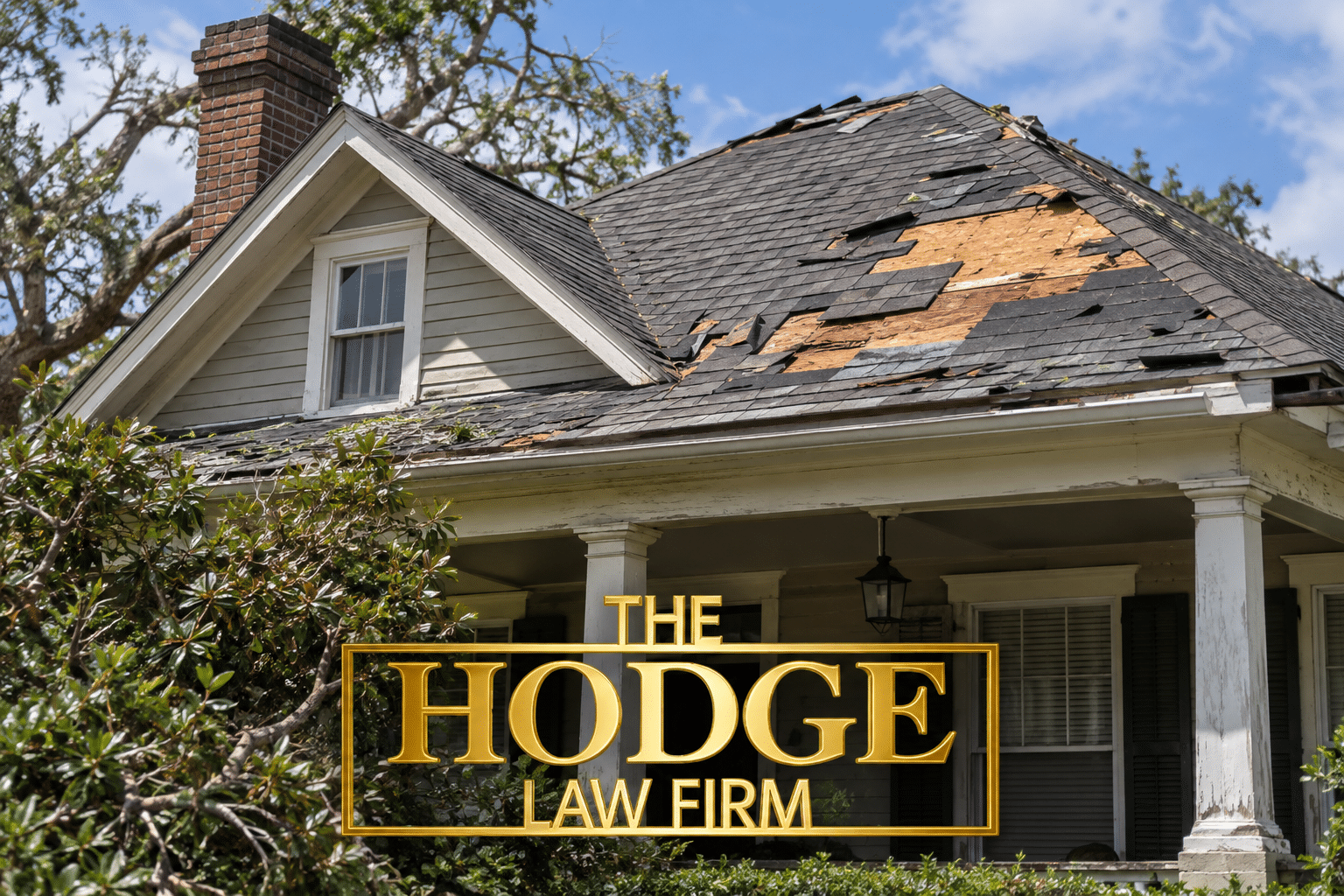
Having an older roof can make an insurance claim more challenging, but just because a roof is old does not mean an insurance company can deny a valid property damage claim. After a storm damages an aging roof, insurers often look at the roof’s condition before the storm and may argue that issues like wear and tear, lack of maintenance, or the roof’s age caused the problem. Homeowners often see things differently. Even if the roof was old, it was working until hail, wind, falling debris, or another covered event caused sudden damage.
This difference is often at the heart of roof insurance disputes. A roof does not need to be new to have storm damage covered by insurance. The main questions are usually about what caused the damage, what the policy covers or excludes, what shape the roof was in right before the event, and whether the insurer did a proper investigation.
At The Hodge Law Firm, we help property owners with insurance claims that have been denied, delayed, or underpaid. If an insurer blames roof damage on age instead of a covered event, we review the policy, the insurer’s investigation, photos, weather records, repair history, contractor reports, engineering opinions, and other evidence to see if the insurance company’s decision is justified.
Does Homeowners Insurance Cover an Old Roof?
Homeowners insurance can cover damage to an older roof, but coverage depends on the policy and the cause of the loss. Property insurance is generally intended to protect against specified risks or losses rather than guarantee that every component of a home will remain in new condition indefinitely.
That distinction matters. Insurance typically does not function as a maintenance program. If shingles gradually deteriorate over many years and eventually need replacement solely because they have reached the end of their useful life, a property insurance policy may not pay for that replacement.
A different situation can arise when a roof that already has some age suffers new damage from a covered event. For example, a 15- or 20-year-old roof may still be protecting the home when a severe windstorm removes shingles, hail fractures roofing materials, or a falling tree damages the roof structure. The existence of preexisting age does not necessarily establish that the new damage is excluded.
The policy language becomes critical. Coverage provisions, exclusions, deductibles, endorsements, roof-payment schedules, actual cash value provisions, and replacement-cost provisions can significantly affect what the insurer owes.
Why Insurance Companies Focus on the Age of a Roof
The age of your roof can matter a lot when you file an insurance claim. If the insurer decides the damage was caused by wear and tear instead of the storm, they might try to deny part or all of your claim.
An adjuster might point out things like worn shingles, granule loss, old repairs, discoloration, cracks, blisters, corrosion, or damaged flashing as signs the roof was already in bad shape. The insurer might also bring in an engineer or consultant who says these problems are due to age, not storm damage.
The challenge is that an older roof can have both old wear and new storm damage at the same time. These issues can exist together.
A roof could have experienced years of ordinary wear and still suffer significant new damage during a particular storm. Determining what damage existed beforehand and what changed because of the reported event can therefore require a much closer investigation than simply determining the roof’s installation date.
Can an Insurance Company Deny My Claim Based Only on the Roof’s Age?
A carrier may have legitimate coverage defenses involving deterioration or wear and tear, but simply saying that a roof is “old” does not necessarily answer the causation question.
Consider a homeowner whose roof is approaching the latter part of its expected service life. Before a major storm, the roof is intact and keeping water out of the house. After the storm, shingles are missing, portions of the roofing system are damaged, and water begins entering areas that had previously remained dry.
The insurer may point to the age of the roofing materials. The homeowner may point to the timing and physical evidence of storm damage.
That is fundamentally a causation dispute.
A careful investigation should examine whether the claimed damage is consistent with the reported event rather than relying exclusively on the age of the roofing system. Photographs, meteorological information, inspection findings, repair records, eyewitness observations, neighboring property damage, and expert evaluations can all become relevant.
How Insurers May Use Wear-and-Tear Exclusions
Property insurance policies frequently contain exclusions concerning deterioration, wear and tear, defective maintenance, or similar conditions. These provisions can become major points of contention in older-roof claims.
An insurer might conclude that cracked or deteriorated shingles resulted from long-term exposure rather than a recent storm. It might attribute interior water damage to an old leak instead of storm-created damage. It might contend that deteriorated flashing or underlayment allowed water intrusion independently of the reported event.
Policyholders should carefully review the precise reason given for a denial rather than assuming that the insurer’s use of terms such as “wear and tear” ends the matter.
The wording of the policy matters, as does the evidence supporting the insurer’s conclusion. An attorney evaluating a disputed claim can examine whether the carrier applied the correct policy provisions to the actual facts of the loss.
Actual Cash Value, Replacement Cost, and Older Roofs
Even when an older roof suffers covered damage, the roof’s age may affect how much the insurance company initially pays.
Some policies provide replacement cost coverage, while others settle certain roof losses on an actual cash value basis. There are also policies containing roof-specific endorsements, depreciation provisions, cosmetic-damage limitations, or payment schedules tied to roof age and roofing material.
Actual cash value calculations generally account for depreciation. Consequently, an older roof may produce a substantially lower payment than the cost of installing a new roof.
Replacement cost coverage can operate differently, although the exact payment process depends on the policy. In some circumstances, an insurer may initially pay an amount reflecting depreciation and make additional amounts available after covered repairs or replacement are completed and policy requirements are satisfied.
Property owners should not assume that the phrase “replacement cost” means every roof claim will automatically result in immediate payment for a completely new roof. The declarations page, endorsements, deductible, loss-settlement provisions, and roof-specific limitations should all be reviewed.
Why Roof Repair Versus Replacement Can Become Another Dispute
Even after an insurer acknowledges some storm damage, another disagreement may arise over whether individual repairs are sufficient or a larger portion of the roofing system must be replaced.
The insurer might estimate the cost of replacing a relatively small number of shingles. A roofing contractor may conclude that isolated repairs cannot reasonably restore the damaged area because the roofing materials are brittle, discontinued, difficult to match, or cannot be repaired without damaging surrounding materials.
This issue can be particularly significant with older roofs.
The dispute is no longer simply whether storm damage occurred. It becomes a dispute over the appropriate scope and cost of restoring covered damage under the terms of the policy. That difference can represent thousands or tens of thousands of dollars, particularly on larger homes and commercial properties.
Be Careful Before Accepting an Age-Based Roof Claim Denial
A denial letter is the insurance company’s coverage determination. Property owners should read it carefully and determine exactly why the carrier believes coverage does not apply.
Look for the specific policy provisions cited in the letter. Determine whether the carrier is alleging deterioration, wear and tear, improper installation, inadequate maintenance, preexisting damage, or another excluded cause.
Then compare that explanation with what actually happened.
Did the roof perform normally before the storm? When did leaks first appear? Were shingles or other materials visibly damaged immediately afterward? Did a contractor identify storm-related conditions? Did neighboring properties sustain similar damage? Did the insurer inspect all affected areas?
These questions can help identify whether further investigation is warranted.
Contact The Hodge Law Firm About A Denied Or Underpaid Roof Damage Claim
If your insurance company says your roof is simply “too old” and refuses to pay for damage you believe was caused by wind, hail, or another covered event, you do not have to assume the carrier’s decision is correct.
At The Hodge Law Firm, we represent property owners in insurance disputes involving roof damage, storm losses, denied claims, delayed claims, and underpaid claims. We can review the policy, denial letter, insurance estimate, inspection findings, photographs, contractor documentation, engineering reports, and other available evidence to determine whether the insurance company’s position should be challenged.
A roof can be old and still suffer new damage. The critical question is whether your insurance company properly investigated the cause and extent of the loss and honored the coverage provided by your policy. Call the roof damage attorney at The Hodge Law Firm today at 409-762-5000 for a free consultation.
We Hold Insurance Companies Accountable.


