
Should I Get My Own Roofing Estimate After Storm Damage?
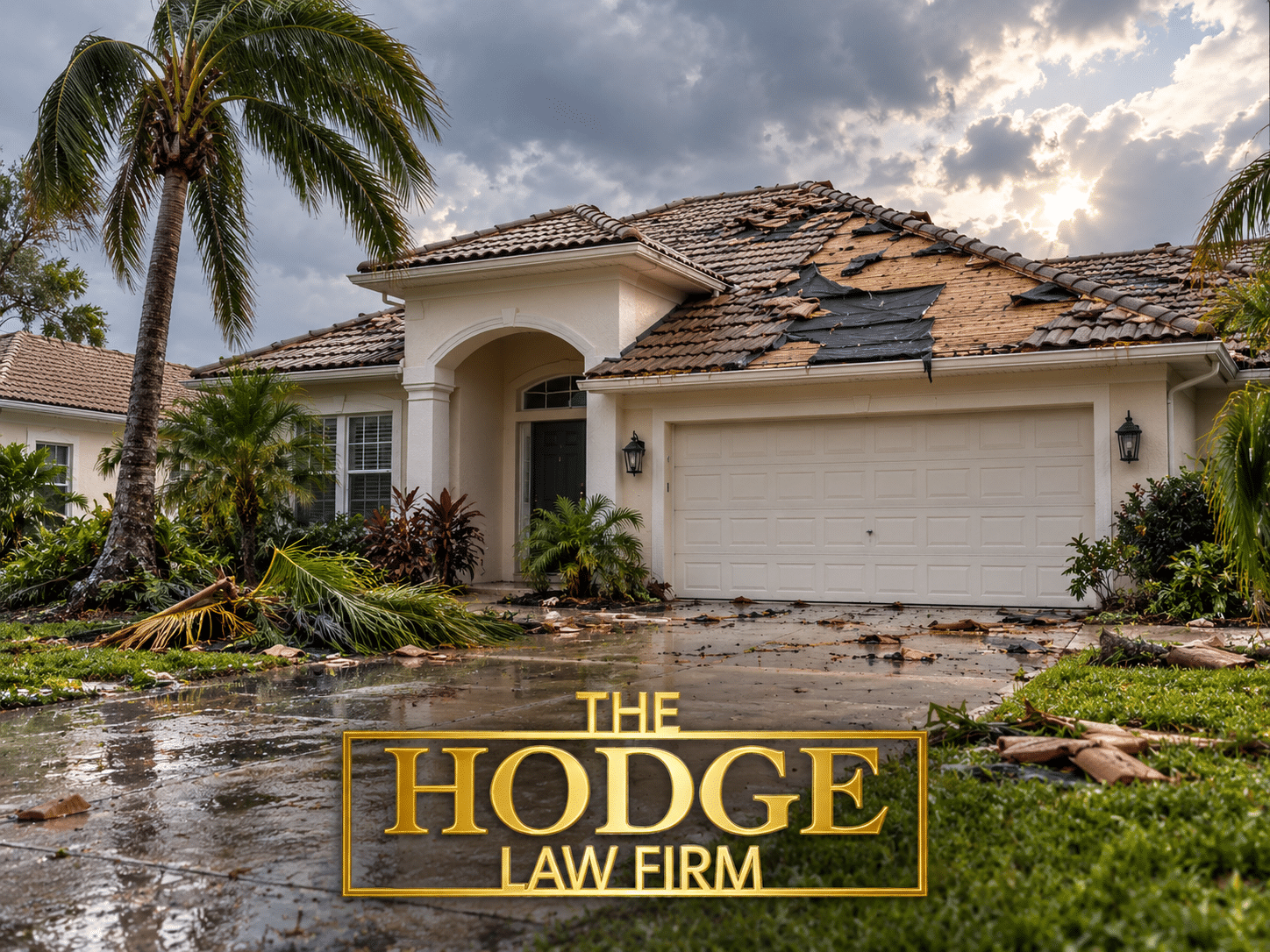
After a major storm like hail, a hurricane, or strong winds, many property owners wonder how much it will cost to fix their roof. The insurance company usually sends an adjuster to inspect the damage and create an estimate, but this estimate is mainly for the insurer’s claim process. It might not reflect what a roofing contractor would actually charge to fully repair your roof.
That’s why getting your own roofing estimate is often a smart move after serious storm damage. An independent estimate might find damage the insurance adjuster missed, include work the insurer left out, and give you a realistic idea of what repairs will actually cost.
This becomes especially important if the insurance company only approves a small repair, but your roofing contractor thinks much more work is needed.
At The Hodge Law Firm, we help homeowners and business owners with insurance claim disputes, including denied, delayed, or underpaid claims. If the insurance company’s estimate doesn’t seem to match the real storm damage, an independent roofing estimate can highlight the gap between what the insurer offers and what it actually takes to fix your property.
Why Your Insurance Company’s Roofing Estimate May Not Tell the Whole Story
Insurance companies usually inspect storm-damaged roofs using their own adjusters or outside firms. Their estimate lists the damage they agree is covered and figures out what they think they owe under your policy. Your insurer and a roofing contractor approach the property from different perspectives. The adjuster is evaluating an insurance claim and determining what the insurer believes falls within the policy’s coverage. A roofing contractor is generally evaluating the physical roof and determining what materials and labor may be necessary to perform the work.
Those two assessments can produce significantly different results.
For example, the insurance company might only cover replacing a few shingles, while your roofer may say that small repairs won’t fix the problem. Sometimes, the estimate includes shingles but leaves out things like flashing, vents, underlayment, gutters, decking, or other parts damaged by the storm.
What Can an Independent Roofing Estimate Show?
A detailed roofing estimate can provide a second assessment of the scope and cost of the necessary work.
The value of the estimate is not simply that it produces another dollar amount. A useful estimate should help explain why the contractor believes particular work is necessary.
Depending upon the circumstances, a roofing estimate may address:
- The approximate size and configuration of the roof.
- The roofing materials that need to be removed and replaced.
- Damaged shingles, tiles, metal panels, or other roofing materials.
- Underlayment and related roofing components.
- Flashing around chimneys, walls, valleys, vents, and penetrations.
- Ridge caps, vents, drip edges, and related accessories.
- Gutters and downspouts damaged during the storm.
- Areas of decking that may require additional evaluation or replacement.
- Labor, material, disposal, and equipment costs.
- Work necessary to complete repairs properly.
A contractor may also photograph and document conditions observed during the inspection. That information can become valuable when there is a disagreement over what the storm actually damaged.
Your Roofer’s Estimate And The Insurance Estimate May Be Thousands Of Dollars Apart
One of the most common warning signs of an underpaid property insurance claim is a substantial difference between the insurance company’s estimate and the amount contractors say the work will actually cost.
Imagine that an insurer estimates covered roof repairs at $14,000. The property owner then obtains estimates from qualified roofing contractors ranging from $31,000 to $36,000.
A difference of that size deserves closer examination.
It does not automatically mean the insurance company acted improperly, nor does a higher contractor estimate automatically establish what the insurer must pay. There may be legitimate differences involving scope, materials, pricing, deductibles, depreciation, policy limitations, or uncovered work.
The important question is why the estimates are different.
Perhaps the insurance adjuster measured the roof differently. The adjuster may have omitted certain components. The insurer may believe portions of the roof can be repaired while the contractor believes replacement is necessary. There may also be disagreements concerning labor costs, material pricing, waste factors, code-related work, or whether particular damage resulted from the storm. A significant discrepancy should therefore be investigated rather than ignored.
Look At The Scope Of Work, Not Just The Bottom-Line Number
Property owners sometimes compare only the final totals on two estimates. That can conceal the real source of the disagreement.
Suppose the insurance company’s estimate is $18,000 and the roofing contractor’s estimate is $29,000. Simply telling the insurance company that the roofer wants $11,000 more may not resolve anything.
The better question is what the roofer included that the insurer did not.
Compare the estimates line by line. Look at the measurements, quantities, roofing materials, labor, flashing, ventilation, underlayment, gutters, disposal, and other components.
You may discover that the dispute is not primarily about pricing. It may be about scope.
If an insurance company has allowed replacement of 500 square feet of roofing but the contractor believes 2,000 square feet must be replaced, arguing about the cost of individual shingles misses the larger issue.
Understanding exactly where the estimates differ can make it easier to identify what needs to be addressed with the insurer.
Can A Roofing Contractor Find Damage The Insurance Adjuster Missed?
Yes. Roof damage is not always obvious during a single inspection.
Hail damage may appear differently depending on the roofing material, age of the roof, storm intensity, and angle of impact. Wind can lift or loosen roofing materials without leaving the dramatic damage people commonly associate with severe storms. Water may enter through compromised areas even when substantial damage is not immediately visible from the ground.
A roofing contractor who regularly works with the particular roofing system may identify conditions that deserve further investigation.
This is especially important when the insurance company’s inspection was brief or limited.
For larger residential and commercial claims, the condition of the roof may also need to be considered together with damage to gutters, siding, windows, exterior finishes, rooftop equipment, interior ceilings, insulation, and other parts of the structure. An insurance claim should reflect the covered damage caused by the loss, not simply the most obvious damage identified during the first inspection.
What If The Insurance Company Says My Roof Can Be Repaired?
Repair-versus-replacement disputes are a major source of disagreements in storm damage claims.
An insurer may conclude that only several shingles, tiles, panels, or sections need replacement. A contractor may disagree and conclude that a limited repair is impractical or will not adequately restore the roof.
The reasons can vary considerably.
Roofing materials may be brittle or difficult to manipulate without damaging surrounding areas. Replacement materials may differ substantially from existing materials. Damage may extend across multiple slopes. Repairing one portion may require disturbing adjacent components. In other situations, the amount or distribution of storm damage may make a much larger repair necessary.
These disputes should be evaluated based on the specific roof, the damage, the applicable policy language, and the work actually required. A detailed contractor assessment can help document why a proposed spot repair may not be sufficient.
Should I Get More Than One Roofing Estimate?
When there is a substantial disagreement over the cost of the work, obtaining more than one estimate can sometimes provide useful perspective. If three established roofing contractors independently inspect the property and arrive at reasonably similar scopes and prices while the insurance company’s estimate is dramatically lower, that information may help identify deficiencies in the insurer’s assessment.
However, the cheapest or most expensive estimate is not automatically the most accurate.
Quality matters more than quantity.
A detailed estimate from a knowledgeable contractor who carefully inspected the property may be far more useful than several vague estimates containing little more than a total price.
You should also be cautious about contractors who immediately promise that the insurance company will pay for an entire new roof before thoroughly evaluating the property or reviewing the circumstances. A roofing estimate should be based on the actual condition of the roof and the work the contractor believes is necessary.
What If The Insurance Company Refuses To Increase Its Estimate?
A disagreement does not necessarily end when the insurance company says no. Property insurance claims can develop over time as additional evidence is submitted and the scope of damage becomes clearer. Depending on the circumstances and policy, there may be procedures for requesting additional consideration, submitting supplemental documentation, obtaining another inspection, or formally challenging the insurer’s position.
When the disagreement is substantial, the issue may extend beyond a simple difference between two estimates.
The insurer may be disputing causation, coverage, the amount of damage, repairability, depreciation, or the extent of work necessary to restore the property. Those questions can have significant financial consequences, particularly when a roof replacement or major commercial property repair is involved.
At that point, property owners should consider having the claim and policy reviewed by an attorney who represents policyholders in insurance disputes.
Signs Your Roof Damage Claim May Be Underpaid
Receiving an insurance payment does not necessarily mean the claim was paid correctly.
A property owner should examine the claim more closely when contractors consistently say the approved work cannot be completed for the amount the insurer estimated.
Other warning signs can include an insurer approving isolated repairs despite widespread storm damage, leaving obviously damaged components off the estimate, refusing to reconsider the claim after receiving additional documentation, or repeatedly attributing storm-related conditions to ordinary wear and tear.
Another concern arises when the insurer’s payment appears substantial until the property owner begins obtaining actual repair bids. If qualified contractors are consistently identifying significantly greater costs, it is worth determining why.
Contact The Hodge Law Firm About An Underpaid Roof Damage Claim
If your roofing contractor says the repairs will cost substantially more than your insurance company estimated, you do not have to simply assume the insurer’s number is correct.
At The Hodge Law Firm, we represent residential and commercial property owners in disputes involving denied, delayed, and underpaid property insurance claims. We can review the insurance company’s estimate, your contractor’s estimate, the policy, photographs, correspondence, and other claim documentation to determine what may be causing the disagreement.
When an insurance company refuses to properly address covered storm damage, we are prepared to hold it accountable. Call the roof damage attorneys at The Hodge Law Firm today at 409-762-5000 for a free consultation.
We Hold Insurance Companies Accountable.


