
Why Does My Contractor Recommend Replacement When the Insurer Recommends Repairs?
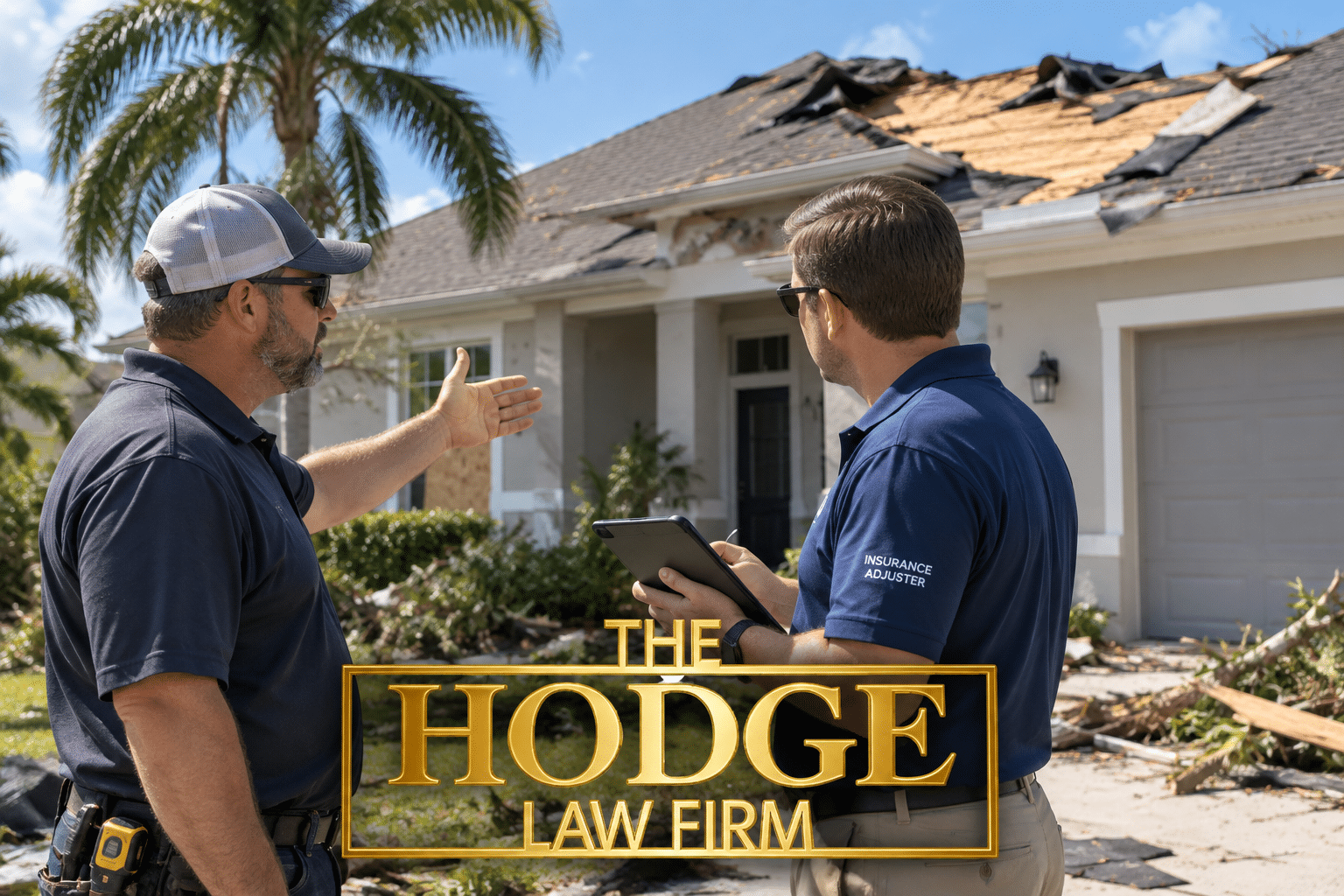
After a storm, fire, water damage, or other serious event, property owners are often surprised to get two very different opinions about repairs. A contractor might say the whole roof, siding, or floor needs replacing, while the insurance adjuster may think only a small area needs fixing.
This disagreement can leave you stuck in the middle. The contractor might explain that small repairs won’t fully restore your property, while the insurer insists that limited repairs are enough. Sometimes, the difference in their opinions can mean tens of thousands of dollars.
At The Hodge Law Firm, we help policyholders with denied, delayed, or underpaid property insurance claims. We often see cases where the insurer’s repair estimate doesn’t match what a contractor says is needed to fix the property. Knowing why these disagreements happen can help you spot when your claim needs a closer look.
Contractors And Insurance Adjusters Are Looking At The Property From Different Perspectives
Contractors and insurance adjusters often have different goals when they look at property damage.
Contractors focus on what needs to be done to repair the property safely and properly. They think about how materials work together, if repairs are possible, what happens when damaged parts are removed, and whether new materials will fit with what’s already there.
An insurance adjuster is evaluating the loss from the standpoint of the insurance policy and the insurer’s claim estimate. The adjuster may be determining what the insurance company believes it owes under the policy based on its inspection, estimating software, internal guidelines, depreciation calculations, exclusions, and interpretation of the cause and extent of damage.
Those different roles can produce very different conclusions.
A contractor may see an interconnected roofing system that cannot realistically be repaired one section at a time. An insurer may see twenty damaged shingles and calculate the cost to replace twenty shingles. A contractor may believe an entire continuous floor must be replaced because matching material is unavailable. The insurer may price only the visibly damaged portion.
The disagreement is therefore not always simply about labor or material costs. It can involve a fundamental dispute over the scope of work required to properly restore the property.
A Repair That Looks Simple On Paper May Not Be Practical In The Field
Insurance estimates often divide property damage into individual line items. That can make a repair appear straightforward when the actual construction process is significantly more complicated.
For example, an estimate may include replacing a limited number of shingles on a roof. In practice, removing those shingles may damage surrounding shingles because of age, brittleness, adhesive bonding, or how the roofing system was installed.
A contractor therefore may conclude that the roof cannot reasonably be repaired without disturbing surrounding materials.
The same issue can arise with siding, tile, flooring, drywall, cabinetry, stucco, exterior finishes, and numerous other building components. Construction materials are frequently installed as interconnected systems. Removing one section can require removing or replacing additional materials that appear undamaged from the surface.
An insurer’s estimate may not fully account for those realities.
That is one reason property owners sometimes receive an insurance estimate that looks technically detailed but still does not provide enough money to complete the actual repairs.
Matching Existing Materials Can Become A Major Issue
Matching is one of the most common reasons contractors recommend broader replacement than an insurer initially approves. Building materials change over time. Manufacturers discontinue colors, styles, dimensions, textures, and product lines. Roofing shingles may fade after years of exposure to sunlight. Vinyl siding colors can change. Flooring may no longer be manufactured. Ceramic tile that was installed ten years ago may be impossible to locate today.
Even when a similar material exists, it may not reasonably match the existing property.
A contractor considering the finished appearance of the repair may determine that replacing only part of the damaged area will leave obvious differences in color, texture, size, or pattern.
The insurer may take a narrower view and argue that a comparable product can be used.
These disagreements can become especially significant when damage involves highly visible areas of a home or commercial property. A homeowner who previously had a uniform roof, siding system, or flooring surface may reasonably question whether a patchwork repair truly restores the property to its pre-loss condition.
Whether an insurance policy requires broader replacement in a particular situation will depend on the policy language and the circumstances of the loss, but matching disputes are frequently an important part of underpaid property insurance claims.
Contractors May Discover Damage That Was Not Visible During The Insurance Inspection
Not all property damage can be identified during an initial visual inspection. Storm damage can extend beneath shingles, siding, roofing membranes, drywall, flooring, insulation, or other finished materials. Water may travel behind walls or underneath flooring. Wind can affect roof decking, flashing, fasteners, underlayment, and other components that are not immediately visible from the surface.
A contractor may identify evidence suggesting that additional damage exists after conducting a more detailed inspection or beginning repair work.
For example, removing damaged roofing materials may reveal compromised underlayment or deteriorated decking caused by storm-created water intrusion. Opening a wall may reveal insulation or framing damage. Removing flooring may reveal moisture damage beneath the finished surface.
The insurer’s original estimate may not include any of that work because the hidden damage had not yet been identified.
When new damage is discovered, the contractor may recommend a substantially larger scope of work than the insurer initially estimated.
Policyholders should not assume that the insurance company’s first estimate is necessarily the final word on the extent of the loss.
The Contractor May Be Considering Building Code Requirements
Another major source of disagreement involves building codes. Older properties may contain construction methods or materials that were permitted when the property was built but would not satisfy current building codes if substantial repair work is performed today.
A contractor preparing to obtain permits and complete repairs may have to account for current code requirements.
Those requirements can affect roofing systems, electrical components, structural connections, insulation, ventilation, windows, exterior assemblies, and many other parts of a building.
As a result, what appears to be a limited repair can sometimes trigger additional work.
An insurance estimate that does not account for required upgrades may significantly underestimate the actual cost of completing legally compliant repairs.
Coverage for ordinance or law-related costs varies between insurance policies. Some policies include specific coverage, while others impose limits or exclusions. Regardless of the coverage question, the contractor still has to determine what work must actually be performed to satisfy applicable construction requirements. That practical reality can explain why the contractor’s estimate is substantially higher than the insurance company’s estimate.
The Insurance Company May Be Relying On A Different Scope Of Damage
Sometimes the disagreement has little to do with construction pricing and everything to do with what the insurer accepts as damaged. Suppose a contractor identifies widespread hail impacts across a roof. The insurer’s adjuster may acknowledge only a small number of damaged shingles.
The contractor may recommend full replacement because the contractor believes the storm damaged the roofing system extensively. The insurer may estimate spot repairs because it attributes many of the observed conditions to age, wear, manufacturing defects, mechanical damage, or ordinary deterioration rather than the storm.
Similar disputes can arise after hurricanes, windstorms, fires, plumbing failures, and other losses.
When the parties disagree about causation, the estimate difference can become extremely large.
The contractor may be estimating the cost to repair all damage believed to have resulted from the covered event. The insurance company may be pricing only the much smaller portion of damage it has accepted. That is why reviewing the scope of damage can be just as important as reviewing the price assigned to each repair item.
Do Not Focus Only On The Bottom-Line Dollar Difference
Property owners sometimes compare the contractor’s estimate and the insurance estimate solely by looking at the total price. That can be misleading.
A contractor might estimate $60,000 in repairs while the insurer estimates $31,000. The critical question is not simply why one number is higher.
The estimates should be compared line by line.
Look for differences involving the areas being repaired, quantities, measurements, materials, labor, tear-off costs, disposal, permits, access work, code requirements, matching materials, overhead, equipment, and related construction activities.
There may also be entire categories of damage included in one estimate and omitted from the other. Understanding those differences can help reveal whether the dispute is primarily about price or about the actual scope of covered damage.
Ask Your Contractor To Explain Why Replacement Is Necessary
A contractor’s recommendation should be supported by more than a statement that replacement would be better. Ask for specifics.
A detailed contractor evaluation may explain why the damaged material cannot be repaired, why replacement materials will not match, why removing damaged sections will affect surrounding materials, why building code requirements increase the scope, or why the proposed repair will not restore the structure properly.
Photographs can be particularly valuable.
Contractors may also be able to identify manufacturer specifications, installation requirements, discontinued materials, testing results, or other information supporting their conclusions.
The stronger the documentation, the easier it may be to evaluate whether the insurance company’s repair estimate is reasonable.
When A Repair Versus Replacement Dispute May Require Legal Review
Not every disagreement requires an attorney. Contractors and adjusters routinely resolve legitimate differences through supplemental estimates and additional inspections.
Some disputes, however, persist even after substantial documentation has been provided.
Warning signs may include an insurer repeatedly refusing to reconsider its repair scope despite multiple contractor opinions, ignoring evidence of hidden damage, excluding necessary construction work, disputing widespread damage without adequately explaining its conclusions, or issuing payment that is far below the cost quoted by qualified contractors.
A policyholder may also become concerned when the insurer focuses heavily on wear and tear, maintenance, age, or prior damage after a covered storm.
At that point, the dispute may extend beyond ordinary estimating differences and involve questions about coverage, causation, claim handling, and the insurer’s obligations under the policy.
Contact The Hodge Law Firm For A Complimentary Consultation
When your contractor says replacement is necessary, but your insurance company will only pay for repairs, the difference can place you in a difficult financial position. You should not have to guess whether the insurer’s estimate is sufficient to restore your property.
At The Hodge Law Firm, we represent homeowners and commercial property owners when insurance companies deny claims, delay payment, underestimate damage, or refuse to pay the full amount reasonably owed under the policy. We can review the competing estimates, investigate the basis for the insurer’s position, and help determine whether additional insurance benefits should be pursued.
Call us for a complimentary consultation regarding your property insurance dispute. Call the insurance claim attorney at The Hodge Law Firm today at 409-762-5000 for a free consultation.
We Hold Insurance Companies Accountable.


