
What If Emergency Hurricane Repairs Cost More Than the Insurer Expected?
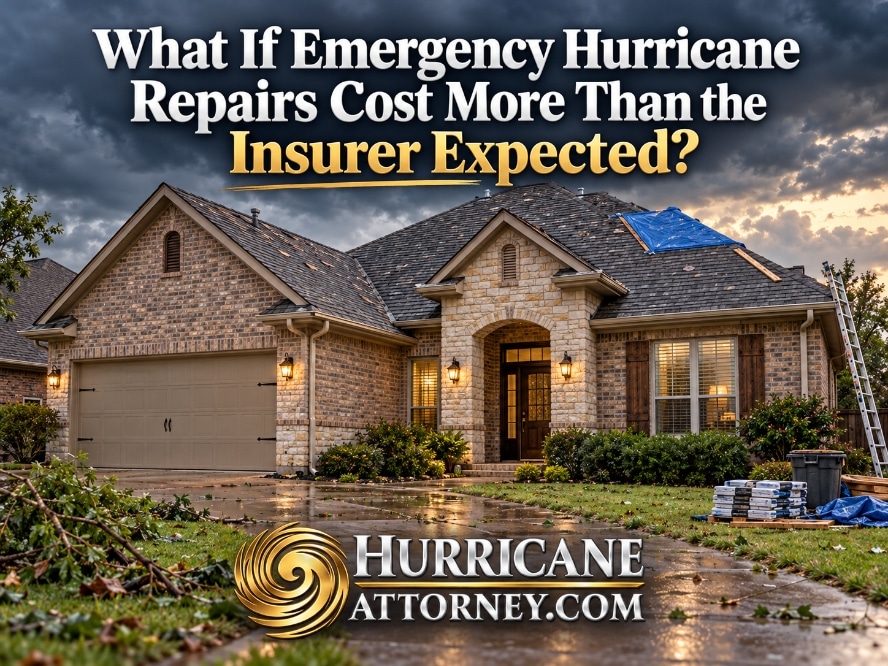
If a hurricane damages your home or business, you often cannot wait weeks for your insurance company to approve repairs. Problems like a damaged roof, broken windows, exposed wiring, or water intrusion can quickly get worse. Many property owners need to hire emergency contractors, buy materials, and start temporary repairs before an insurance adjuster arrives. Sometimes, the real cost of protecting your property is higher than what the insurance company thinks is reasonable. This can lead to unexpected bills, disputes over reimbursement, or claims that you spent too much on emergency repairs.
At The Hodge Law Firm, we represent property owners who encounter insurance disputes after hurricanes and other destructive storms. We understand that emergency decisions are often made under difficult circumstances, particularly when contractors are scarce, and additional damage threatens the property. An insurance company’s estimate does not automatically establish the maximum amount recoverable for necessary emergency repairs. Coverage depends on the insurance policy, the circumstances surrounding the repairs, and applicable law.
Why Emergency Hurricane Repairs Often Cost More Than Expected
Hurricanes create unusual conditions that can significantly increase the cost of emergency property repairs. When thousands of homes and businesses are damaged at once, demand for qualified contractors, roofing materials, water extraction equipment, and temporary protection services can outstrip local availability.
Contractors may charge extra for emergency mobilization, specialized equipment, extended hours, or transportation from unaffected areas. Materials that were readily available before the storm may become difficult to obtain. Property owners may also need temporary generators, commercial drying equipment, structural stabilization, or emergency debris removal.
Insurance adjusters sometimes prepare estimates using standard regional pricing databases that do not fully reflect the conditions immediately following a major hurricane. Although these databases can provide useful pricing information, they may not account for contractor shortages, emergency labor rates, or the actual availability of materials.
When an insurance company relies on pricing that does not reflect post-hurricane conditions, a substantial disagreement may develop over the reasonable cost of emergency repairs.
Your Responsibility to Prevent Additional Property Damage
Most property insurance policies contain provisions requiring policyholders to take reasonable steps to protect damaged property from further harm. These provisions are commonly described as duties after loss or mitigation requirements.
For example, a property owner whose roof is partially destroyed may need emergency tarping to prevent rainwater from entering the building. If water has already entered, immediate extraction and drying may be necessary to reduce the likelihood of additional damage.
However, the responsibility to protect property does not necessarily mean that every emergency expense will be reimbursed. Insurance companies may question whether the work was necessary, whether the charges were reasonable, or whether the damage resulted from a covered event.
This creates a difficult situation for policyholders. Delaying repairs can allow additional damage to develop, while authorizing expensive emergency services can lead to disputes over reimbursement.
We help property owners evaluate these disagreements by examining the policy’s mitigation provisions, the condition of the property, and the circumstances that made emergency repairs necessary.
Can Your Insurance Company Refuse to Pay the Full Repair Bill?
An insurance company may dispute emergency repair expenses when it believes the charges exceed reasonable market rates or include services that were unnecessary. However, simply stating that a contractor charged too much does not establish that the insurer’s position is correct.
The circumstances surrounding the repairs matter. A contractor responding immediately after a major hurricane may face substantially different operating conditions than a contractor performing routine maintenance months later.
Insurers may also challenge charges for temporary roofing, water mitigation, demolition, emergency board-up services, or equipment rental. Some policies contain specific limitations on emergency measures, while others address reasonable protective expenses through broader coverage provisions.
Another important distinction involves temporary repairs versus permanent restoration. Emergency work generally focuses on preventing additional damage and making the property reasonably safe. Permanent repairs may require separate estimates, inspections, and coverage determinations.
The central question is whether the disputed expenses qualify for reimbursement under the policy and applicable law, considering the services performed and the conditions existing when the work was authorized.
What Evidence Can Help Prove Emergency Repair Costs Were Reasonable?
Documentation can make a substantial difference when an insurance company challenges emergency repair expenses. Property owners should preserve evidence showing both the extent of the hurricane damage and the circumstances requiring immediate action.
Photographs and videos taken before repairs can establish the property’s condition. Contractor invoices should identify the services performed, materials used, labor charges, equipment expenses, and dates of service.
Written communications with contractors can also explain why certain work was necessary. For example, a contractor may document that exposed roofing materials created an immediate risk of additional water intrusion or that emergency drying equipment was needed to address significant moisture.
When possible, property owners should preserve competing estimates, records of contractor availability, and communications with the insurance company. These materials may help explain why a lower-cost alternative was unavailable. At The Hodge Law Firm, we examine repair documentation alongside the insurer’s estimate to identify unsupported reductions, disputed charges, and potential coverage issues.
What Happens When the Insurer’s Estimate Is Much Lower?
A substantial difference between the contractor’s invoice and the insurance company’s estimate does not necessarily mean the property owner must accept the lower amount. The insurer should be able to explain the basis for disputed charges, including the pricing information, policy provisions, or factual findings supporting its position. Property owners may respond with contractor explanations, supporting invoices, photographs, and other relevant evidence.
In some cases, the disagreement concerns labor rates or equipment charges. In others, the insurer may claim that particular repairs were unrelated to hurricane damage or exceeded the work reasonably necessary to protect the property. A dispute may also involve depreciation, deductibles, coverage limits, or whether particular expenses fall under separate policy provisions.
When an insurance company refuses to reconsider an inadequately supported estimate, legal representation may help determine whether the dispute involves an incorrect coverage interpretation, an unreasonable claim evaluation, or other potentially actionable conduct.
How The Hodge Law Firm Helps With Disputed Emergency Repair Expenses
Emergency hurricane repair disputes require more than comparing two estimates. We examine what happened at the property, why the work was performed, and whether the insurer properly evaluated the resulting expenses.
Our review may include the insurance policy, contractor documentation, inspection findings, claim correspondence, and the insurer’s stated reasons for reducing payment. We also consider whether the insurance company adequately investigated the damage and addressed evidence supporting the property owner’s position.
When negotiations fail to resolve a legitimate dispute, litigation may be necessary to pursue benefits owed under the policy. Depending on the governing law and specific circumstances, additional remedies may be available for certain improper claims practices.
Our goal is to help property owners pursue the insurance benefits they are entitled to receive without allowing unsupported estimates to determine the outcome of their claims.
Frequently Asked Questions About Emergency Hurricane Repair Costs
Can I Hire an Emergency Contractor Before My Insurance Adjuster Arrives?
Yes, property owners can generally arrange reasonable emergency measures to protect their property before an adjuster arrives. However, policy requirements concerning notice, documentation, and repairs must still be considered. Photograph the damage before work begins whenever safely possible, retain invoices, and notify your insurer promptly. Emergency protective measures should also be distinguished from permanent restoration work.
What If My Contractor Charges More Because of Hurricane-Related Shortages?
Higher charges may be justified when contractor shortages, material availability, emergency labor requirements, or transportation expenses affect the cost of necessary repairs. However, reimbursement is not automatic. Supporting documentation explaining the charges and the conditions existing when the services were performed can help establish why the expenses were reasonable.
Can My Insurance Company Require Me to Use a Cheaper Contractor?
The answer depends on your insurance policy and the circumstances. An insurer may question whether repair charges are reasonable, but that does not automatically establish that its preferred contractor or estimate reflects available emergency services. Policyholders should review any contractor-selection requirements and preserve evidence when lower-priced services were unavailable or could not be performed promptly.
What If I Already Paid for Emergency Repairs Out of Pocket?
You may still be entitled to reimbursement for covered expenses, subject to the terms and limitations of your policy. Keep payment receipts, detailed invoices, photographs, and communications explaining the need for immediate repairs. If the insurance company refuses reimbursement or pays substantially less than the documented expenses, an attorney can review the insurer’s reasoning and determine whether the claim warrants further action.
Should I Accept a Partial Payment for Emergency Repairs?
Accepting a partial payment does not necessarily prevent you from pursuing additional benefits. However, you should carefully review any accompanying settlement agreement, release, or payment conditions before signing. Some documents may affect your ability to dispute remaining expenses. If significant repair costs remain unpaid, we can examine the proposed payment and explain your options.
Contact The Hodge Law Firm For A Hurricane Claim Consultation
When emergency hurricane repairs cost more than your insurance company expected, you should not have to accept an unsupported reduction without understanding your rights. Necessary repairs can be expensive, especially when a major storm creates dangerous conditions and limited contractor availability.
At The Hodge Law Firm, we represent residential and commercial property owners facing denied, delayed, and underpaid hurricane insurance claims. We examine disputed repair expenses, evaluate insurance company decisions, and pursue appropriate legal remedies when insurers fail to honor their contractual obligations. Call the hurricane damage lawyers at The Hodge Law Firm today at 409-762-5000 for a free consultation.
We Hold Insurance Companies Accountable.


