
Wind Versus Flood Damage After a Florida Hurricane: Why the Difference Matters
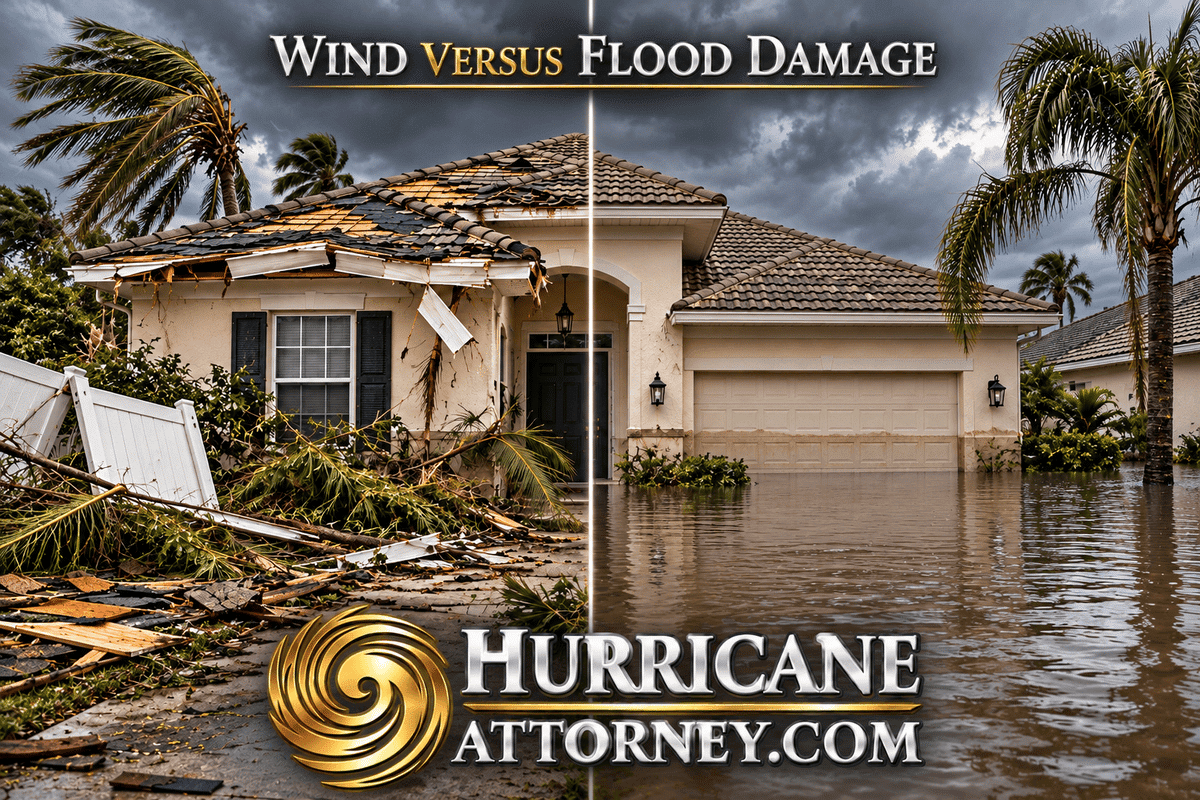
Florida hurricanes can cause serious property damage, but figuring out whether the damage was caused by wind or flooding is often one of the biggest challenges in an insurance claim. A strong hurricane can rip shingles off a roof, break windows, let rainwater inside, and push storm surge through the same property. Even though all this can happen during one storm, insurance companies usually treat each type of damage differently, depending on what caused it and what the insurance policy says. For Florida homeowners and business owners, this difference can decide whether the insurance company pays for repairs or denies thousands of dollars in claims.
At The Hodge Law Firm, we help policyholders fight disputed hurricane damage claims and make sure insurance companies are held responsible when they wrongly deny or undervalue covered losses.
Why Florida Insurance Policies Treat Wind And Flood Damage Differently
Most standard Florida homeowners insurance policies cover some types of wind damage from hurricanes, but there are usually exclusions, conditions, and deductibles. Flood damage, on the other hand, is usually not covered by standard homeowners policies. To get flood coverage, you typically need a separate flood insurance policy through the National Flood Insurance Program (NFIP) or a private insurer.
This difference is especially important in coastal areas like Tampa, Fort Myers, Naples, Sarasota, Miami, and Fort Lauderdale, where hurricanes can bring both strong winds and storm surge at the same time.
Under Florida Statutes § 627.4025, hurricane coverage is addressed within Florida’s property insurance framework. The statute also defines the hurricane-related period relevant to hurricane deductibles. Whether a particular loss is covered ultimately depends on the policy’s provisions and the evidence establishing what caused the damage.
How Hurricane Wind Damage Occurs
Hurricane winds can damage roofs, exterior walls, windows, doors, and other parts of a building. If strong winds remove roofing materials or create openings, rainwater can get inside and damage ceilings, insulation, floors, electrical systems, and personal belongings.
Insurance companies sometimes argue that water damage inside a home was caused by flooding, not by rain coming in through a storm-created opening. They may also say that roof damage was due to wear and tear, poor installation, or existing maintenance issues.
We look at whether the hurricane caused damage that let water into the building and whether the policy covers the resulting damage inside. Photos, weather reports, inspection results, and contractor evaluations can help show what happened and when.
Florida insurance policies may have specific limits on coverage for rainwater that comes in through roofs, windows, or doors. That’s why it’s important to prove that wind caused an opening if you want to get compensation.
Why Storm Surge And Flood Damage Create Coverage Disputes
Storm surge occurs when hurricane winds push seawater inland, flooding coastal neighborhoods and commercial districts. Flooding may also result from overflowing waterways or accumulated surface water.
Unlike rain entering through a wind-damaged roof, storm surge generally falls within flood exclusions in standard property insurance policies.
Disputes become complicated when wind damages a building before floodwater reaches it. An insurance company may contend that the flooding caused nearly all the destruction, even when significant structural damage had already occurred.
For example, hurricane winds might destroy a commercial building’s roof several hours before storm surge floods the first floor. The insurer may attempt to attribute extensive losses to excluded flooding without adequately evaluating the earlier wind damage.
We believe each claimed loss deserves an investigation grounded in the actual evidence, rather than assumptions based solely on the presence of floodwater.
When Wind And Flooding Damage The Same Florida Property
One of the most difficult hurricane insurance disputes involves concurrent or sequential causes of loss. A hurricane may produce covered wind damage and excluded flood damage affecting different portions of the same building.
Many Florida property insurance policies contain anti-concurrent causation provisions. These provisions may exclude certain losses when an excluded cause contributes to damage, even if another cause occurs simultaneously or in a different sequence. Their application depends on the policy language and controlling Florida law.
Florida courts have addressed these issues in decisions including Sebo v. American Home Assurance Co., 208 So. 3d 694 (Fla. 2016). That decision examined competing causes of property damage and the application of the concurrent cause doctrine under the policy at issue. It does not mean every mixed wind-and-flood claim must be covered.
A careful legal review is necessary to determine which losses are covered, whether exclusions apply, and how the policy treats multiple causes of damage.
Evidence That Can Help Establish The Cause Of Hurricane Damage
Determining whether wind or flooding caused a particular loss frequently requires more than an insurance adjuster’s initial inspection.
Photographs taken before floodwater entered the property may demonstrate that roofing materials, windows, or exterior walls were already damaged. Time-stamped videos, neighboring property photographs, and witness observations can also help establish when particular damage occurred.
Meteorological reports may identify wind speeds, rainfall, storm surge levels, and the hurricane’s progression through the affected community. Structural engineers and qualified building professionals may evaluate damage patterns to determine whether wind pressure, water movement, or multiple forces contributed to the destruction.
Property owners should preserve damaged materials when reasonably possible, document emergency repairs, and maintain copies of contractor estimates and insurance communications. These records may become important if an insurer later changes its explanation for denying coverage.
Florida Insurance Claim Deadlines And Policyholder Protections
Florida property owners must pay close attention to deadlines after hurricane damage. Under Florida Statutes § 627.70132, a claim or reopened claim generally must be reported within one year after the date of loss, while a supplemental claim generally must be reported within 18 months. Statutory exceptions and the applicable policy terms should be reviewed.
Florida Statutes § 627.70131 also establishes requirements concerning insurer acknowledgment, investigation, and claim decisions, subject to statutory qualifications and exceptions.
When an insurer delays payment, misrepresents policy provisions, or fails to properly investigate a claim, additional legal questions may arise under Florida’s insurance laws, including § 624.155 and § 626.9541.
We review the insurer’s stated reasons for denying or reducing payment, applicable policy provisions, investigation records, and evidence supporting the policyholder’s position.
Five Frequently Asked Questions About Florida Hurricane Wind And Flood Claims
Does Florida Homeowners Insurance Cover Wind-Driven Rain?
Coverage depends on the policy and how rainwater entered the property. Many policies cover certain interior water damage when hurricane winds first create a covered opening in the roof or exterior structure. Rainwater entering without such an opening may be excluded or subject to limitations.
Can An Insurance Company Deny My Entire Claim Because My Property Flooded?
The presence of floodwater does not automatically establish that every part of the damage was caused by flooding. However, exclusions and anti-concurrent causation provisions may affect coverage. We examine the damage evidence and policy language to determine whether covered wind losses were improperly denied.
Do I Need Separate Flood Insurance In Florida?
Generally, yes. Standard homeowners policies ordinarily exclude flooding and storm surge. Separate coverage may be available through the NFIP or private insurers. Flood insurance policies have their own definitions, limitations, deductibles, and claim procedures.
What Happens If My Wind Insurer And Flood Insurer Blame Each Other?
Conflicting coverage positions can leave property owners without adequate payment. Independent inspections, engineering assessments, and a review of both policies may help establish which insurer is responsible for particular losses. Different claim deadlines and procedures may also apply.
Can I Challenge A Denied Hurricane Insurance Claim In Florida?
Yes. Policyholders may dispute denials, submit supporting evidence, request reconsideration, or pursue appropriate legal remedies. Depending on the policy and circumstances, litigation, appraisal, or other dispute resolution procedures may be available. Prompt legal review is important because deadlines and procedural requirements can affect available options.
Contact The Hodge Law Firm For A Complimentary Consultation
When an insurance company blames flooding for damage that may have resulted from hurricane winds, Florida property owners deserve a careful evaluation of their coverage rights. At The Hodge Law Firm, we represent homeowners and commercial property owners in disputed hurricane insurance claims, including denied, delayed, and underpaid losses.
Call the hurricane claim attorneys at The Hodge Law Firm today at 409-762-5000 for a free consultation.
We Hold Insurance Companies Accountable.


